

Slovenian language origins: history, roots and unique features
Discover the origins of the Slovenian language, its Slavic roots, unique dual grammar and rich dialect diversity. A fascinating language journey.
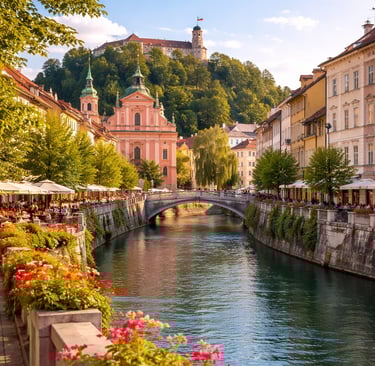
Slovenian Language Origins: History, Roots and Unique Features
The Slovenian language is one of the most intriguing yet lesser-known languages in Europe. Spoken by about two million people, it has a rich history that reflects centuries of cultural evolution in Central Europe.
For language learners, Slovenian offers a unique combination of ancient roots, remarkable dialect diversity, and rare grammatical features.
Where Does the Slovenian Language Come From?
Slovenian belongs to the South Slavic group of the Slavic language family, which also includes Croatian, Serbian, Bulgarian and Macedonian.
All Slavic languages developed from a common ancestor known as Proto-Slavic, spoken by early Slavic populations around the 6th century. As these populations spread across Europe, their language gradually evolved into several regional branches.
Today the Slavic languages are usually divided into three main groups:
West Slavic (Polish, Czech, Slovak)
East Slavic (Russian, Ukrainian, Belarusian)
South Slavic (Slovenian, Croatian, Serbian, Bulgarian, Macedonian)
Slovenian developed in the Alpine region when Slavic settlers arrived in the area that is now Slovenia during the early Middle Ages. Because of its geographic position between the Germanic, Romance and Slavic worlds, the language has been influenced by multiple cultural and linguistic traditions.
The First Written Slovenian Texts
One of the most remarkable facts about Slovenian is its long written tradition.
The earliest texts related to the Slovenian linguistic area are the Freising manuscripts, written around the 10th century. These documents are among the oldest surviving texts written in any Slavic language using the Latin alphabet.
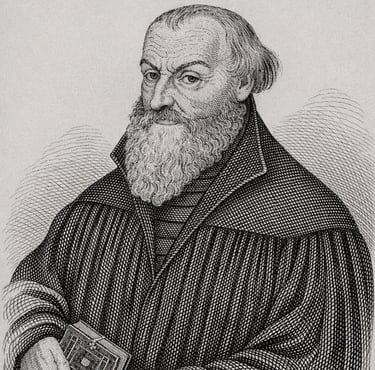
However, the real development of the Slovenian literary language began in the 16th century, during the Protestant Reformation. The Protestant reformer Primož Trubar published the first printed books in Slovenian in 1550, laying the foundations for the modern written language. His work helped preserve Slovenian cultural identity during centuries when the region was governed by larger political powers.
A Language with Extraordinary Dialect Diversity
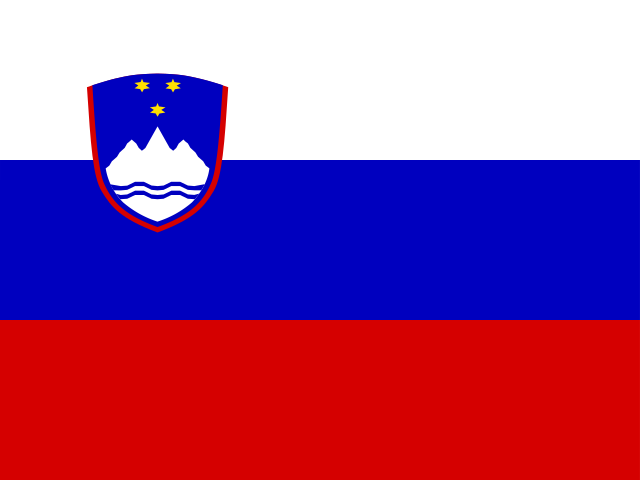
Slovenia has a population of about 2.1 million people. The vast majority speak Slovene as their native language, which is the official language. Nevertheless, despite Slovenia being a relatively small country, Slovenian has one of the highest dialect diversities in Europe.
Linguists identify more than 40 dialects, often grouped into several major dialect families. In some cases, speakers from distant regions may initially find it difficult to understand each other.
This linguistic diversity developed mainly because Slovenia’s mountainous geography historically isolated communities, allowing local speech varieties to evolve independently over centuries.
There are also recognized minority languages: Italian in the coastal area and Hungarian in the northeast, both officially protected. In addition, many people understand or speak languages from the former Yugoslavia, such as Serbian, Croatian, and Bosnian, due to historical and cultural ties.
As a result, Slovenia has a highly multilingual population, with most Slovenians also speaking English and often German, especially among younger generations.
The Rare Dual Form in Slovenian Grammar
Another unique feature of Slovenian is the preservation of the dual grammatical number. Most modern languages distinguish only between:
singular
plural
Slovenian, however, includes a special form used specifically for exactly two people or objects. For example, verbs, nouns and pronouns can change depending on whether we talk about:
one person
two people (dual)
three or more people (plural)
Only a few languages in the world still use this grammatical feature, making Slovenian particularly interesting for linguists and language enthusiasts.
Why Slovenian Is an Interesting Language to Learn
Although Slovenian is spoken by a relatively small population, learning it offers several advantages for curious language learners. It gives access to:
a unique Slavic linguistic system
a deep historical and cultural heritage
a language that preserved rare features lost in many other modern languages
For those interested in Slavic languages, Slovenian can also serve as a gateway to understanding other languages of the region. Nevertheless, if you search online for ways to learn Slovene, you’ll quickly notice something strange: Slovene is often missing in big learning Apps—or treated as a side option. If you want to learn more and find out why click here.
Exploring Slovenian Through Small Steps
Learning a language like Slovenian may seem challenging at first, but it becomes much more accessible when approached through small, consistent learning steps. This is exactly the philosophy behind Explorino.
Instead of overwhelming learners with long grammar lessons, Explorino focuses on micro-exploration of language: discovering words, patterns, and expressions gradually, through short learning moments that build over time.
With this approach, even languages that may initially seem difficult—like Slovenian—become discoverable, engaging, and rewarding to learn.
Free trial. No registration required.
Contacts
Write to us here for any questions or support requests, or contact us directly by email.
info@explorino.com
© 2026. All rights reserved.
Try it for free
Try Explorino free for 10 days—no registration needed.